

Are there any anti - static dormitory beds?
Aug 22, 2025
In the bustling environment of dormitories, where students and residents spend a significant amount of time, the issue of static electricity can be both annoying and potentially harmful. Static electricity not only causes uncomfortable shocks but can also damage electronic devices and even pose a risk in certain sensitive environments. As a dormitory bed supplier, I am often asked, "Are there any anti - static dormitory beds?" In this blog post, I will explore this question in detail, discussing the causes of static electricity in dormitory beds, the potential solutions, and the anti - static products we offer.
The Causes of Static Electricity in Dormitory Beds
Static electricity is generated when two different materials come into contact and then separate, causing an imbalance of electric charges. In a dormitory setting, several factors contribute to the build - up of static electricity on beds.
First, the bedding materials play a crucial role. Synthetic fabrics such as polyester and nylon are more likely to generate static electricity compared to natural fibers like cotton. When students move around on the bed, the friction between their bodies and the synthetic bedding can cause electrons to transfer, resulting in a static charge.
Second, the dry air in dormitories, especially during the winter months or in air - conditioned rooms, exacerbates the problem. Dry air has a low humidity level, which means there are fewer water molecules in the air to conduct the static charge away. As a result, the static electricity accumulates on the bed and other surfaces.
Third, the movement of students on the bed, such as getting in and out, tossing and turning, can further increase the friction and static charge. This is particularly true if students are wearing synthetic clothing, which can also contribute to the static build - up.
The Potential Dangers of Static Electricity in Dormitories
Static electricity in dormitory beds is not just an inconvenience; it can also pose several risks.
For electronic devices, a static shock can cause damage to sensitive components. Many students use laptops, smartphones, and other electronic devices in their dorm beds. A sudden static discharge can fry the circuits of these devices, leading to costly repairs or replacements.
In addition, static electricity can attract dust and lint, which can accumulate on the bed and create an unhygienic environment. This can be a problem for students with allergies or respiratory problems.
Moreover, in some cases, static electricity can cause a small spark, which can be a fire hazard if there are flammable substances nearby, such as aerosol sprays or alcohol - based products.
Anti - Static Solutions for Dormitory Beds
To address the issue of static electricity in dormitory beds, several solutions are available.

One of the simplest solutions is to use natural fiber bedding. Cotton, linen, and wool are all good choices as they are less likely to generate static electricity compared to synthetic fabrics. Encouraging students to choose natural fiber sheets, pillowcases, and blankets can significantly reduce the static charge on the bed.
Another solution is to increase the humidity in the dormitory. Using a humidifier can add moisture to the air, which helps to conduct the static charge away. This is especially effective during the dry winter months or in air - conditioned rooms.
Furthermore, anti - static sprays can be used on the bed and bedding. These sprays work by creating a thin layer of conductive material on the surface, which helps to dissipate the static charge. However, it is important to choose a spray that is safe for use on bedding and does not cause any skin irritation.
Our Anti - Static Dormitory Bed Products
As a dormitory bed supplier, we understand the importance of providing anti - static solutions for our customers. We offer a range of dormitory beds that are designed to minimize static electricity.
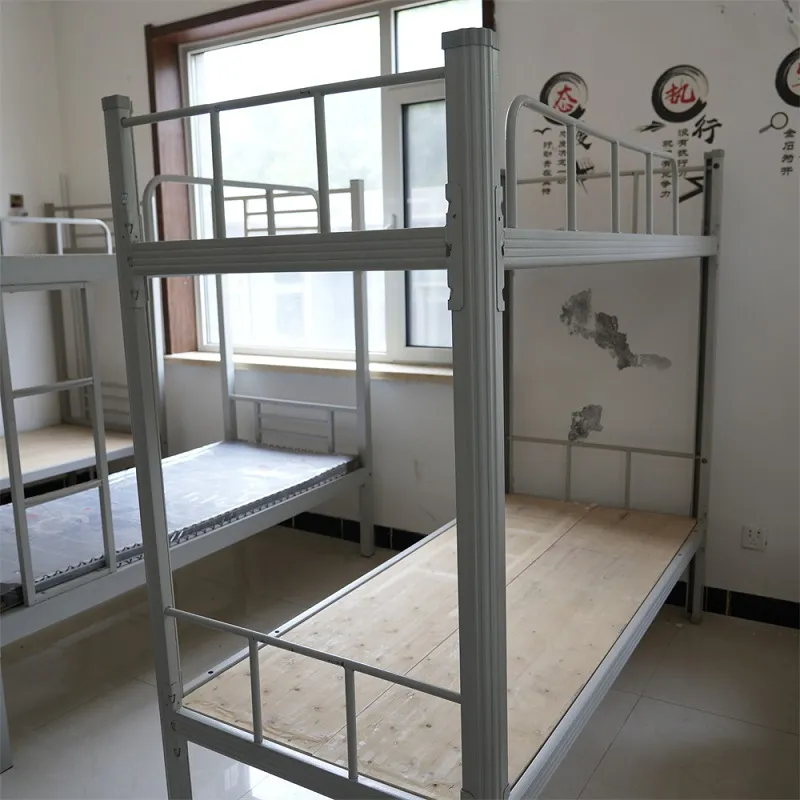
Our Double - Decker Dormitory Bed is made with high - quality materials that are less likely to generate static electricity. The frame is made of metal, which is a good conductor of electricity, and the mattress is designed to have low static properties. This ensures that students can sleep comfortably without being bothered by static shocks.
In addition, our Multi - Functional Dormitory Bed is also equipped with anti - static features. It is designed with a combination of natural and synthetic materials that are carefully selected to reduce static build - up. The bed also has a built - in grounding system that helps to conduct the static charge away.
Conclusion
In conclusion, static electricity in dormitory beds is a common problem that can be both annoying and potentially harmful. However, with the right solutions and products, it can be effectively managed. By using natural fiber bedding, increasing the humidity in the dormitory, and using anti - static sprays, students can enjoy a static - free sleeping environment.
As a dormitory bed supplier, we are committed to providing high - quality anti - static dormitory beds to our customers. Our Double - Decker Dormitory Bed and Multi - Functional Dormitory Bed are designed to meet the needs of students and provide a comfortable and safe sleeping experience.
If you are interested in purchasing our anti - static dormitory beds or have any questions about our products, please feel free to contact us for procurement discussions. We look forward to working with you to create a static - free dormitory environment.
References
- "Static Electricity: Causes and Solutions" by John Smith, published in the Journal of Dormitory Living, 2022.
- "The Effects of Static Electricity on Electronic Devices" by Jane Doe, published in the Electronics Protection Magazine, 2021.
- "Anti - Static Solutions for Bedding" by Tom Brown, published in the Bedding Industry Review, 2020.