How Can a mobile compact shelving system Reduce Wasted Storage Space?
Oct 23, 2026
A mobile compact shelving system helps reduce wasted storage space by improving how shelving units are arranged and accessed. In traditional storage layouts, separate aisles are usually maintained between fixed shelves so that users can reach stored materials. These aisles remain in place even when no one is retrieving items, which limits the amount of floor space available for storage. A mobile compact shelving system addresses this issue by allowing shelving units to move together when access is not required and creating an aisle only when a particular section needs to be reached.
One of the main ways to improve space utilization is to reduce the number of permanently open aisles. By bringing the shelving units closer together, the system can make more of the available room usable for storage. When a user needs to retrieve a document or other item, the relevant aisle can be opened according to the operating procedure. This arrangement is particularly useful in archives, libraries, offices, and other environments where storage demand is high but the room area is limited.
Effective layout planning is another important factor. Before installing a mobile compact shelving system, users should assess the room's dimensions, entrances, columns, windows, floor conditions, and access routes. The shelving arrangement should be designed to suit the available space without blocking emergency exits, necessary walkways, or other essential facilities. Appropriate planning helps avoid unusable gaps and ensures that the system can be operated safely and conveniently.
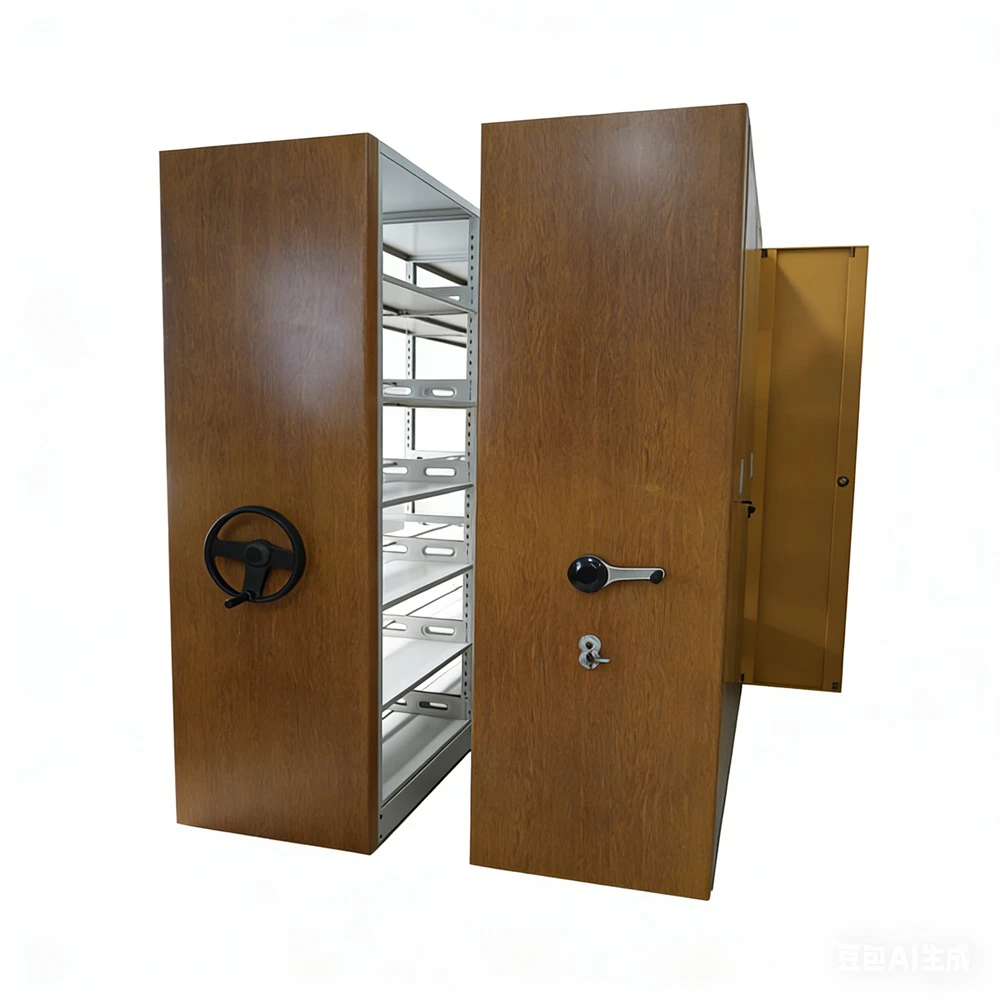
Making good use of vertical space can further improve storage efficiency. Shelving should be arranged to suit the height of the room and the dimensions of the materials being stored, while leaving appropriate clearance for safe use and access. Adjustable shelf positions, where available, can help accommodate items of different sizes and reduce unnecessary gaps between shelves. However, users should always follow the system's structural and loading requirements rather than increasing storage density at the expense of safety.
Classification and organization also play an important role in reducing wasted space. Similar materials can be stored together, and each section can be assigned a clear category or location. Items should be arranged neatly to prevent unnecessary gaps, while frequently accessed materials should be placed where they can be retrieved conveniently. Clear labels and accurate location records help users find items without repeatedly opening unrelated aisles or rearranging stored materials.
Regularly reviewing stored items can also improve space utilization. Outdated records and unnecessary materials may occupy valuable storage areas. Organizations should review retention requirements and internal management policies before removing or transferring stored items. Keeping the inventory organized helps ensure that available space is used for materials that genuinely need to be retained.
Finally, users should consider both storage capacity and operating convenience when planning a mobile compact shelving system. Overly dense arrangements may make retrieval difficult if classification, access, and movement requirements are ignored. A well-planned system balances storage efficiency with safe operation and convenient access.
Through compact arrangement, suitable layout planning, effective use of vertical space, and systematic organization, a mobile compact shelving system can reduce unnecessary gaps, improve storage capacity, and help organizations make better use of their available floor area.