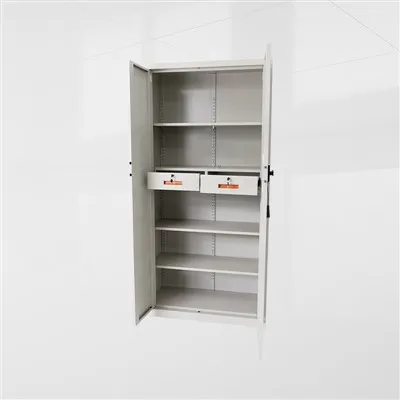
Practical experience gaps between Compact shelving and filing cabinets
Aug 28, 2026
Compact shelving and regular filing cabinets both serve archival‑storage purposes. Practical‑experience disparities manifest in space performance, access efficiency, layout flexibility, cost and environmental adaptability. Real‑world user perceptions diverge from bare product specifications. Many purchasers only focus on nominal storage volume and overlook scenario‑driven experiential differences.
First comes intuitive spatial and storage‑capacity perception. Fixed filing cabinets demand permanent walk‑in aisles between adjacent units. These aisles occupy floor space continuously regardless of actual usage. In archive rooms furnished with multiple filing‑cabinet groups, most floor area is consumed by passages rather than document storage. Installing Compact shelving within identical premises enables frame merging, with only temporary retrieval aisles required, boosting total document‑holding capacity by roughly one‑half. For the same volume of archival materials, filing cabinets fill rooms and consume extensive aisle space, whereas Compact shelving holds equivalent records on a smaller ground footprint. This constitutes its core experiential advantage. Yet trade‑offs exist. Filing‑cabinet doors open directly for instant access with all aisles permanently available. Compact shelving requires cranking frames to generate passages before record retrieval, adding one procedural step.
Marked differences appear in retrieval‑operation experience. Filing‑cabinet doors can open simultaneously across multiple units. Multiple staff may work independently along separate aisles without mutual interference, suiting scenarios of high‑frequency parallel document consultation. By contrast, Compact shelving normally opens only one access aisle at a given time. Operators must repeatedly reposition frames to switch access zones when several users need records from different rows, reducing multi‑tasking efficiency. Cranking heavily‑loaded Compact‑shelving rows demands physical exertion and may prove strenuous for less‑strong users. Electric Compact shelving enables one‑touch movement yet requires familiarization with control interfaces. Filing‑cabinet operation carries nearly zero learning barriers; temporary staff and older personnel can operate units immediately.
Layout‑adjustment and relocation experiences differ greatly. Individual filing‑cabinet units possess moderate weight. They can be freely rearranged on‑site. When room layouts change, cabinets can be physically moved. Users may also purchase cabinets incrementally as archives expand. Compact shelving relies on ground‑mounted rails fixed during installation. Completed installations have fixed overall positions. Relocation necessitates rail disassembly and re‑construction with high relocation costs. Initial layout planning must be thorough. Adding or removing frame rows later requires rail modification, yielding far less flexibility than filing cabinets.
Visual and environmental‑adaptation perceptions also vary. Standard filing cabinets have compact dimensions and fit offices and small storage spaces without strict requirements for ceiling height or floor flatness. Compact shelving consists of tall heavy assemblies that demand solid level floors and matching ceiling heights; small rooms may produce oppressive sensations. Neat aligned Compact‑shelving rows create highly unified archive‑room aesthetics, while scattered filing‑cabinet arrangements tend to look disordered.
Procurement and long‑term‑use experience diverges. Filing cabinets involve low purchase expenses, simple installation, few failure points and minimal maintenance needs. Full Compact‑shelving systems command higher investment, incorporating rails and mechanical transmission assemblies requiring periodic inspection. Damaged filing‑cabinet units can be replaced individually. Compact‑shelving components interlink; partial faults may impair entire‑row performance.
Neither option holds absolute superiority. Compact shelving yields superior experience for high‑volume archives, limited floor space and low‑frequency multi‑person consultation. Filing‑cabinets offer greater comfort for modest document volumes, frequent parallel access and frequently rearranged premises.