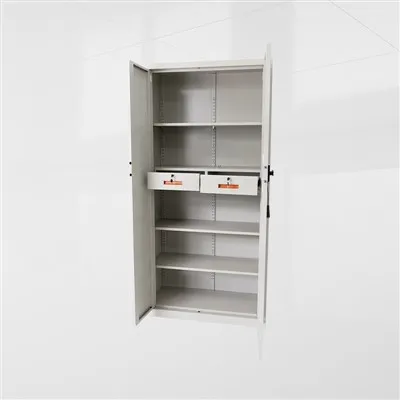
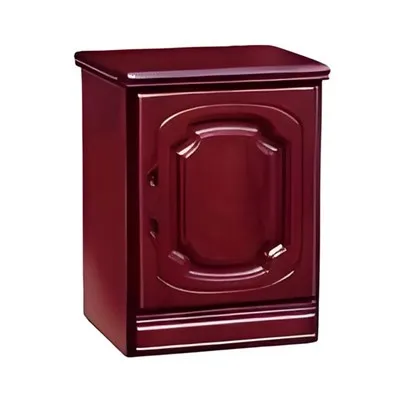
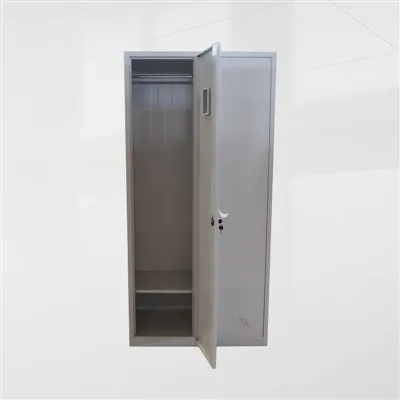
Confidential Cabinets: The Core Guarantee Of Modern Office Security
May 10, 2025
With the rapid development of informatization and digitalization, enterprises have an increasing demand for information security. As a key device for protecting sensitive documents, data and valuables, confidential cabinets have become an indispensable part of the modern office environment. Whether it is a financial institution, a government department or a multinational enterprise, the application scope of confidential cabinets is constantly expanding, and its importance is becoming more and more prominent.
The core function of confidential cabinets is to provide physical protection to prevent unauthorized personnel from accessing confidential information. Unlike ordinary file cabinets, confidential cabinets are made of high-strength materials, such as high-quality steel, and are equipped with multiple lock systems, including mechanical locks, electronic password locks and even biometric technology to ensure that only authorized personnel can open them. In addition, many high-end confidential cabinets also have fireproof, moisture-proof, anti-magnetic and other functions, which further enhance the security of data storage.
In the context of globalization, foreign trade enterprises need to pay special attention to information security. Cross-border transactions involve a large amount of sensitive business data, such as contracts, customer information, financial records, etc. Once leaked, it may cause significant losses to the enterprise. Confidential cabinets can not only protect paper documents, but also store digital storage media such as USB flash drives and hard drives, providing enterprises with all-round security protection.
With the advancement of technology, smart safes are gradually becoming the new favorite in the market. Such products are usually equipped with functions such as remote monitoring and access record query. Enterprise managers can use mobile phones or computers to grasp the use of safes in real time, further improving management efficiency. At the same time, some safes also support multi-user permission management, and employees of different levels can only access specific areas, effectively preventing internal information leakage.
In the future, the design of safes will pay more attention to intelligence and humanization, such as integrating Internet of Things technology to achieve linkage with other security systems. For foreign trade companies, choosing a reliable safe is not only a reflection of fulfilling information security responsibilities, but also an important measure to enhance corporate competitiveness. Today, when data security is becoming increasingly important, safes are undoubtedly a solid barrier for companies to protect confidential information.