Are Dense Mobile Shelves Suitable for Long-Term Storage of Archives and Documents?
Nov 12, 2026
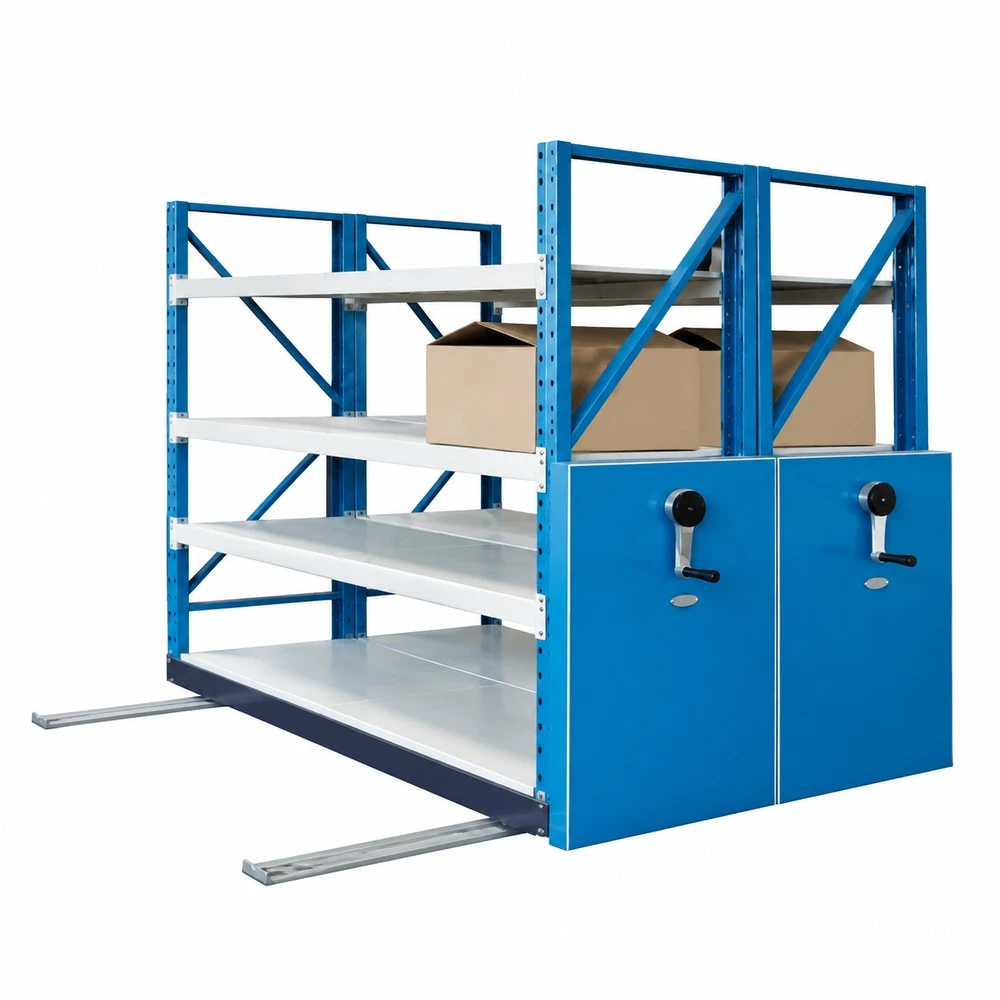
Dense Mobile Shelves are highly suitable for the centralized storage of archives and documents. They are commonly used in government departments, businesses, educational institutions, hospitals, and other organizations that need to manage large quantities of archived materials. As organizations continue their daily operations, the number of contracts, financial records, personnel files, business documents, and historical records that need to be preserved may continue to increase. Traditional fixed shelving requires permanent aisle space, which can create storage limitations as the volume of archived materials grows. Dense Mobile Shelves provide a more efficient storage solution through their compact arrangement and movable aisle design.
First, Dense Mobile Shelves help improve the space utilization of archive rooms. Traditional archive shelving usually requires permanent aisles between rows. Dense Mobile Shelves can create access aisles by moving the shelving units, reducing the space occupied by permanent passages. For organizations with limited office space but large quantities of archived materials, this arrangement allows more documents to be stored within the available area and may reduce the need for additional storage facilities.
Second, Dense Mobile Shelves support systematic archive classification. Documents are usually organized according to year, department, business category, reference number, or retention category. Different types of archives can be placed in separate shelving sections and identified through labels, numbers, and catalogs. Employees can then locate the appropriate storage section using the relevant document information, reducing the time required to search for files.
Third, they help maintain an organized archive storage environment. Without proper storage planning, traditional archive rooms may experience problems such as randomly placed documents, mixed archive boxes, and unclear storage locations. Dense Mobile Shelves provide relatively standardized storage areas. When used with archive boxes, folders, and classification labels, they help keep documents arranged systematically and make future organization and inventory checks easier.
Fourth, Dense Mobile Shelves are suitable for storing different types of paper documents. Businesses can use them to preserve financial vouchers, employee records, contracts, and operational documents. Schools can store student records, teaching materials, and historical documents. Hospitals and other institutions can use them to manage administrative archives and other paper-based records suitable for this type of storage. Different organizations can divide storage sections according to their actual management requirements.
Fifth, they help improve everyday archive management efficiency. When employees need to retrieve documents, they can use catalogs and identification numbers to locate the corresponding shelving section, then move the relevant units to create an access aisle. By establishing a consistent document classification and location management system, organizations can reduce repeated searches, misplaced files, and missing records.
However, the suitability of Dense Mobile Shelves for long-term archive storage does not mean that simply placing documents on the shelves guarantees their long-term preservation. Paper documents can be affected by moisture, dust, sunlight, and insects. Therefore, archive rooms must also maintain appropriate storage conditions.
In addition, archive rooms should establish clear document registration and borrowing procedures. Frequently accessed documents can be placed in more convenient locations, while historical archives requiring long-term preservation can be organized in designated storage sections.
Overall, Dense Mobile Shelves provide an effective space management solution for long-term archive storage, especially for organizations with large quantities of documents, limited storage space, and a need for systematic classification. With proper layout planning and standardized management procedures, they can improve both storage capacity and everyday archive management efficiency.