Where Should a Confidential Filing Cabinet Be Placed in an Office?
Nov 05, 2026
The placement of a Confidential Filing Cabinet affects daily convenience, document management efficiency, and the storage environment. When arranging a Confidential Filing Cabinet in an office, users should consider more than just available floor space. The importance of the stored documents, personnel movement, and overall office conditions should also be taken into account.
First, a relatively private office area should be prioritized. A Confidential Filing Cabinet is designed to store important documents and internal materials. If it is placed in a public area with frequent foot traffic or easy access by unauthorized individuals, the risk of unnecessary document access may increase. Therefore, it is advisable to place the cabinet in an administrative office, finance office, management office, or dedicated archive room. Access should be controlled according to the organization's internal management procedures.
Second, the cabinet should be positioned according to the department responsible for managing the documents. If the cabinet is mainly used for financial records, placing it in the finance office allows employees to organize and retrieve documents conveniently. If it is used for personnel records, the human resources department may be a more appropriate location. For materials shared by several departments, a dedicated archive area can be established for centralized storage and management.
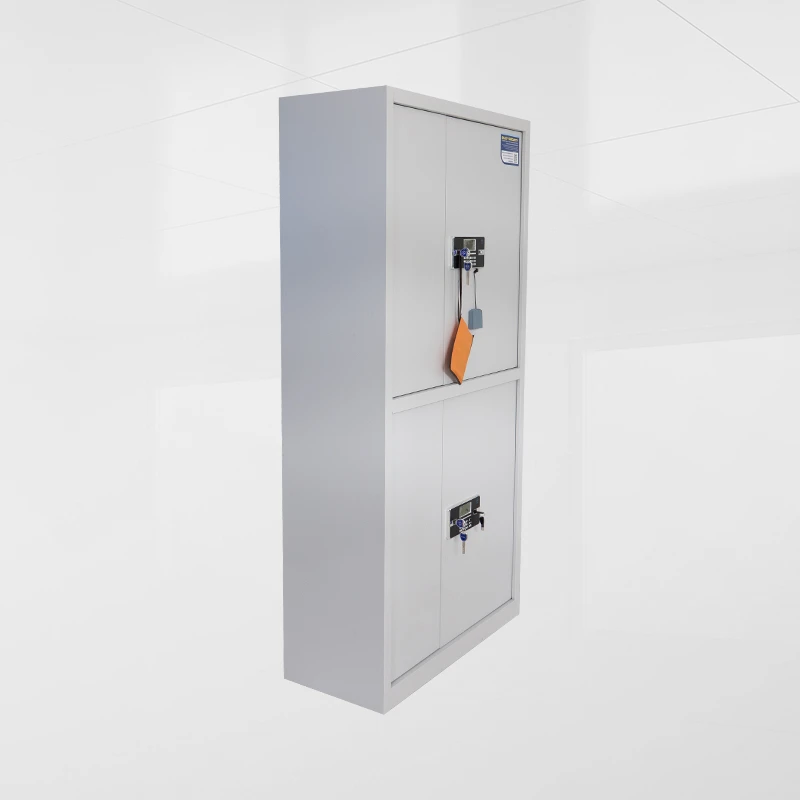
Third, the cabinet should be placed in a dry and well-ventilated indoor environment. Paper documents can be affected by excessive moisture. If a Confidential Filing Cabinet is placed near restrooms, pantry areas, water pipes, or walls that are prone to leakage, the stored documents may become damp, moldy, or deformed. Therefore, it is recommended to choose a location with stable environmental conditions and adequate air circulation.
Fourth, prolonged exposure to direct sunlight should be avoided. Continuous sunlight may cause the cabinet surface to fade or deteriorate and may also affect the preservation of paper documents inside. If the cabinet must be placed near a large window where sunlight is intense, consider changing its orientation or selecting another suitable location.
Fifth, sufficient space should be left for opening the cabinet doors. A Confidential Filing Cabinet may need to be accessed regularly. If desks, cartons, or other objects are placed directly in front of it, normal operation may become difficult. Before installation, consider the door-opening direction, standing space for users, and the convenience of retrieving and returning documents.
Sixth, the overall office layout should also be considered. The cabinet should not be placed in main passageways, emergency exits, or areas where it is likely to be hit by moving people or equipment. Proper placement helps maintain a tidy working environment and reduces the possibility of accidental damage during daily activities.
In addition, a Confidential Filing Cabinet used for important documents should have a clearly designated person responsible for its management. Access permissions should be assigned according to the organization's internal procedures. Even when the cabinet is placed in a relatively private area, proper document management practices are still necessary to maintain information security.
Overall, the ideal location for a Confidential Filing Cabinet should provide a balance of security, suitable environmental conditions, convenient access, and efficient use of office space. Choosing a location according to the department's actual workflow and document management requirements helps the cabinet perform its intended function more effectively.