Which delivers better experience for archive storage, a Vertical File Cabinet or a bookshelf?
Sep 09, 2026

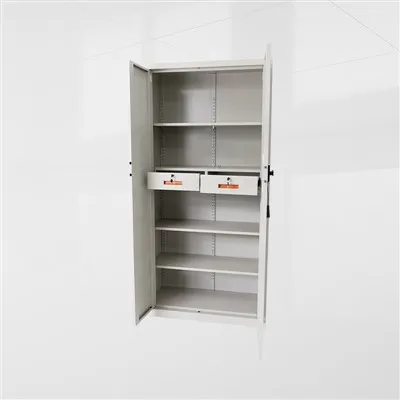
Vertical File Cabinets and ordinary bookshelves are two common storage devices in office archive‑management scenarios. Nevertheless, significant differences exist in structural design, protective capability, security and user experience. For long‑term standardized archive storage, Vertical File Cabinets outperform bookshelves comprehensively, especially for government‑enterprise archive management and vital‑document preservation. User‑experience contrasts are elaborated from multiple dimensions below. First of all, protective‑performance gaps constitute the core distinction for archive storage. Ordinary bookshelves adopt open‑frame layouts without shielding. In office surroundings, floating dust settles continuously on archive surfaces and gaps. Dust builds up rapidly and requires frequent cleaning. Neglected archives will suffer paper yellowing and faded handwriting. Open‑style shelves cannot block moisture or sunlight. Archives easily get damp and wrinkled in humid weather. Direct sunlight accelerates paper brittleness and causes permanent archive damage. Open‑structure bookshelves fail to keep insects and debris away, bringing risks of moth‑eaten and stained documents. They are not suitable for long‑term preservation of important archives. Equipped with full‑enclosed doors, Vertical File Cabinets block dust, moisture, sunlight and insects. Internal cabinets maintain dry and clean conditions to protect paper archives effectively, extend preservation cycles, cut maintenance frequency and reduce archive‑management costs.
Secondly, differences lie in confidentiality and storage standardization. Everything stored on open bookshelves is exposed. Personnel files, financial vouchers, confidential official documents and commercial contracts can be viewed or taken arbitrarily by any person. There exist prominent risks of information leakage, loss and misplacement. Without placement constraints, documents on open bookshelves tend to be stacked and slide into disorder, costing extra time for retrieval. Vertical File Cabinets are fitted with dedicated locks for authorized‑personnel‑only access. They prevent information leakage and loss and satisfy confidentiality standards for confidential and private documents. Internal layered layouts support categorized placement sorted by archive type, year and department. Files stay stable without sliding or mess. Retrieval and placement efficiency rise substantially to meet standardized archive‑management specifications. Thirdly, comparisons cover space utilization and service‑life‑related experience. Most bookshelves feature fixed‑height shelves with poor adaptability for archive boxes and bound documents of varied thicknesses. Thin archives tilt while thick ones cannot fit, resulting in wasted space. Wooden bookshelves have limited load‑bearing capacity. Long‑term heavy‑archive stacking causes shelf bending, cabinet deformation, cracking and paint peeling, shortening service life. Vertical File Cabinets support adjustable shelf heights to accommodate archives, folders and data books of various sizes and maximize space utilization. Steel cabinets maintain stable load‑bearing performance without deformation under long‑term heavy‑archive loads. Their service life greatly exceeds that of bookshelves with stable long‑run performance. Lastly, applicable‑scenario differences should be noted. Bookshelves are fit for publicly‑accessible books, idle materials and display‑oriented files for basic storage purposes only. They cannot satisfy professional archive‑management demands. Custom‑built for archive storage, Vertical File Cabinets integrate storage, protection, confidentiality and tidying functions. They handle both ordinary daily‑office documents and long‑term confidential archives. They represent optimal choices for professional archive storage with superior long‑term usability, safety and practicality compared with open‑style bookshelves.