


How Should the Tracks of Dense Mobile Shelves Be Cleaned and Maintained?
Nov 14, 2026
Tracks are important components of Dense Mobile Shelves. They support the shelving units and guide their movement. The cleanliness and operating condition of the tracks directly affect how smoothly the shelving system moves. If dust, paper scraps, sand, or other debris accumulate inside the tracks, roller resistance may increase, making the shelving units difficult to move and potentially affecting the normal operation of the entire system. Therefore, establishing a suitable track cleaning and maintenance routine is important.
First, dust and debris should be removed from the track surfaces regularly. In environments such as archives, libraries, and warehouses, paper scraps, dust, and small particles can easily enter the track area. If these materials accumulate over time, they may interfere with normal contact between the rollers and tracks. During routine cleaning, soft brushes, vacuum cleaners, or other suitable cleaning tools can be used to remove debris from inside the tracks and surrounding areas.
Second, special attention should be paid to foreign objects inside the tracks. Larger pieces of paper, sand, or other debris may become trapped in the track grooves and interfere with roller movement. If visible foreign objects are found, they should be removed promptly to prevent additional wear on the rollers and tracks during operation. Avoid using sharp metal tools to scrape the track surfaces forcefully, as this may cause scratches or other damage.
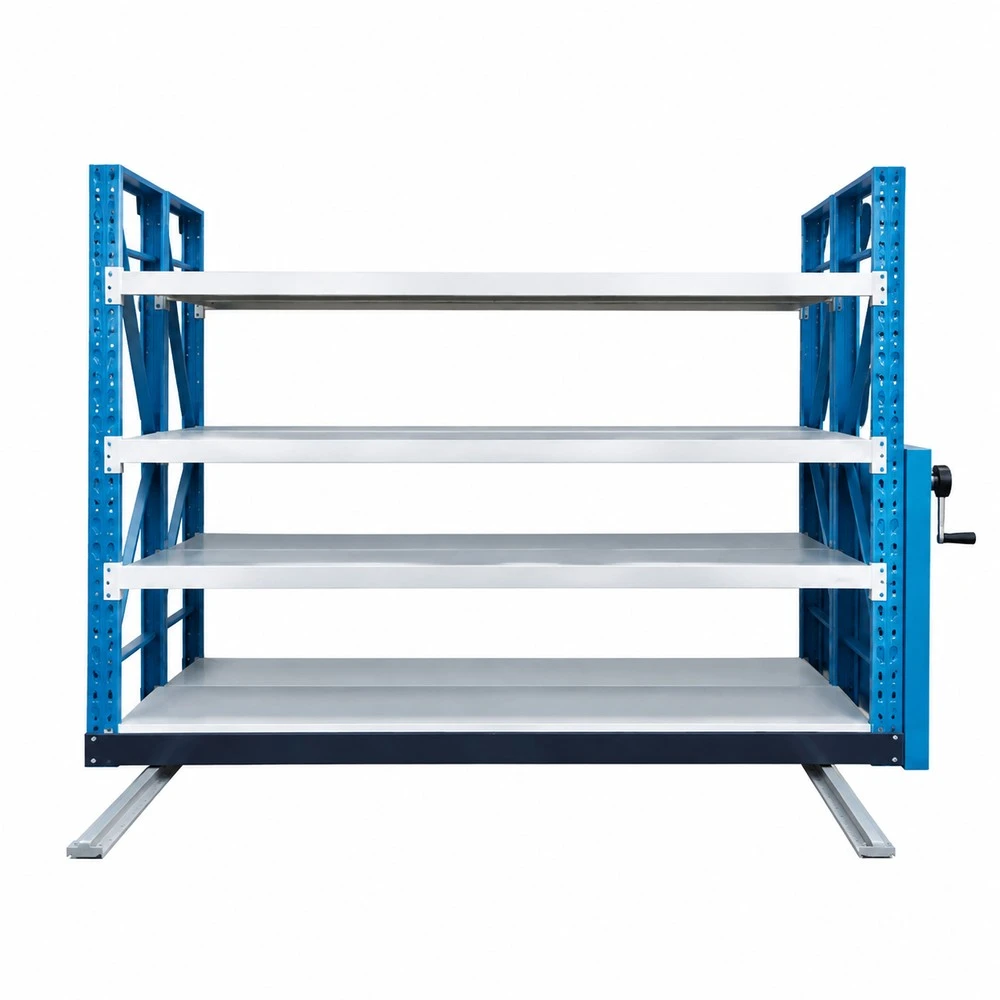
Third, the levelness and fixing condition of the tracks should be inspected regularly. Dense Mobile Shelves rely on stable tracks for smooth movement. If a track becomes loose, deformed, or uneven, the shelving units may move irregularly or experience abnormal shaking. During routine inspections, check for visible damage, secure connections, and proper track alignment. If any abnormalities are found, professional inspection and repair should be arranged promptly.
Fourth, the wear condition of the tracks and related moving components should be monitored. During repeated movement, the rollers maintain continuous contact with the tracks, which may gradually cause wear. If unusual noises, increased movement resistance, or irregular operation occur, the contact and alignment between the rollers and tracks should be inspected. Appropriate maintenance should be carried out when necessary.
Fifth, suitable lubrication should be applied according to the product structure. Certain moving components of Dense Mobile Shelves require periodic lubrication to reduce mechanical friction and maintain smooth operation. However, not all tracks should be lubricated directly. Specific maintenance procedures should follow the manufacturer's instructions and the actual product design. Using an unsuitable lubricant may attract more dust and debris, making cleaning more difficult.
Sixth, the areas surrounding the tracks should be kept clean and unobstructed. Documents, packaging materials, tools, and other objects should not be placed randomly near the tracks, as they may enter the moving area and interfere with operation. Archives and libraries should establish regular cleaning procedures to reduce the accumulation of dust and paper scraps.
In addition, safety should be considered during cleaning and maintenance. Before starting maintenance work, stop the movement of the shelving units according to the operating instructions and make sure that no one is retrieving or storing items in the affected area. For electrically operated Dense Mobile Shelves, the power supply and control system should be handled according to the manufacturer's instructions to prevent unexpected movement during maintenance.
Overall, track maintenance for Dense Mobile Shelves mainly involves regular dust removal, foreign object cleaning, track condition inspections, roller wear monitoring, and appropriate lubrication. Keeping the tracks clean and in good operating condition helps improve movement smoothness and extend the service life of related components.


