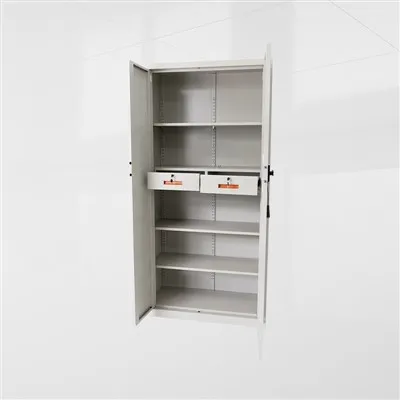
Analysis Of The Production Process Of Shelves
May 07, 2025
As the core equipment of modern warehousing and logistics, the production process of shelves directly affects the load-bearing capacity, durability and safety of the products. With the growth of global warehousing demand, shelf production technology is also constantly being optimized. This article will introduce in detail the complete production process of shelves from raw materials to finished products, helping foreign trade practitioners and industry customers to have a deeper understanding of the key links of shelf manufacturing.
The first step in shelf production is material selection and pretreatment. High-quality shelves usually use cold-rolled steel or hot-rolled steel as the main material. These steels need to be cut and leveled to ensure accurate size and smooth surface. Some high-end shelves also pre-treat the steel with galvanizing or spraying to improve rust resistance.
The next step is the processing and forming of shelf components. Steel is formed into basic components such as columns, beams, and shelves through processes such as stamping and bending. Columns usually adopt a porous design to adjust the layer height; beams need to be fixed by welding or bolting to ensure a stable structure. This link requires extremely high precision, and any deviation may affect the overall stability of the shelf.
Assembly is the core step in shelf production. The components are spliced on an automated or semi-automated production line, and some shelves need to be welded and reinforced. The welding quality directly affects the load-bearing capacity of the shelf, so high-strength welding rods are required and the welding temperature is strictly controlled. After assembly, the shelf needs to undergo preliminary quality inspection, including dimensional verification and load-bearing test.
Surface treatment is a key link in improving the durability of the shelf. Common treatment methods include electrostatic spraying, hot-dip galvanizing, etc. These processes can effectively prevent steel from rusting and extend the service life of the shelf. The sprayed shelf also needs to be cured at high temperature to ensure that the coating is firm and not easy to fall off.
Finally, the finished product inspection and packaging. The shelf needs to pass multiple quality inspections such as load-bearing test and stability test to ensure compliance with international standards. Qualified products will be rust-proof packaged and affixed with product logos for easy transportation and installation.
Understanding the shelf production process will help foreign trade companies better control product quality and meet the high standards of international customers for storage equipment. With the popularization of automation technology, shelf production will be more efficient and environmentally friendly in the future, providing better solutions for the global logistics industry.