


What Precautions Should Be Taken When Moving And Operating A Mobile Compact Shelving System?
Oct 23, 2026
A mobile compact shelving system is designed to store archives, documents, and books in a space-efficient manner. Because the system involves moving shelving units, staff movement, and the retrieval of stored materials, correct operating practices are essential for protecting personnel, safeguarding stored items, and reducing equipment wear.
First, inspect the operating area before moving the shelving units. Ensure that the tracks are free of paper scraps, documents, tools, and other debris. The aisles between the shelving units and the surrounding areas should also be clear. Check whether anyone is standing near or between the units, as unexpected movement may cause collisions. Only begin operation after confirming that the movement path is safe and unobstructed.
Second, move the shelving units steadily. Follow the system's normal operating procedures and avoid sudden force, abrupt pushing, or rapid pulling. If movement becomes unusually difficult or the system produces abnormal noises, stop immediately and investigate the cause. Check for obstructions or possible component problems. Do not force the shelving units to move, as this may place additional strain on the rollers, tracks, and transmission components.
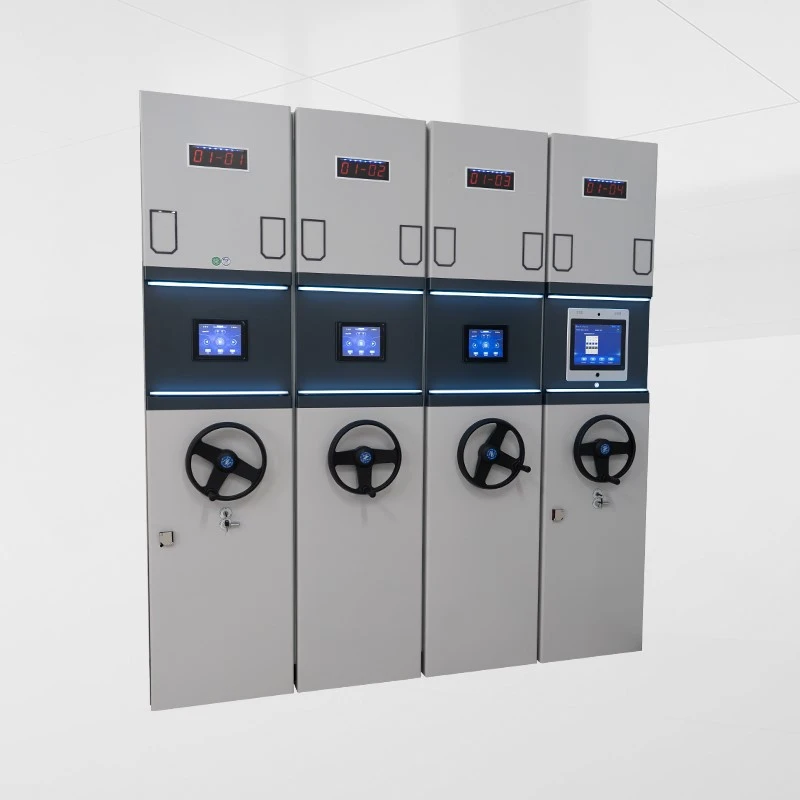
Personnel safety requires particular attention. Mobile compact shelving systems can create narrow spaces between adjacent units, presenting potential pinch hazards. Keep hands, feet, and other body parts away from gaps between shelving units, tracks, and moving components. Before moving a unit, make sure nearby personnel have moved clear of the operating area. When several people share the system, communicate clearly to avoid simultaneous movement of adjacent units or other conflicting operations.
The arrangement of stored items is also important. Files, documents, and books should be organized neatly and should not protrude beyond shelf edges or into the gaps between adjacent units. Improperly positioned items may fall, shift, or interfere with movement. Heavy items should be distributed according to the system's operating instructions rather than concentrated in one area. Items that may slide or become scattered should be organized securely before the shelving units are moved.
Aisle management is essential when the shelving units are open. Before entering the space between units to retrieve documents, confirm that the shelving system has stopped moving and is stable. Never reach for documents while the shelving units are moving, and do not enter a narrow aisle before the units have been safely positioned. After retrieving the required materials, return them to their proper locations and restore the shelving units to the appropriate position according to normal operating procedures.
The operating environment also affects safety and performance. Keep the tracks clean, ensure that the floor is free of standing water and debris, and avoid placing objects where they may obstruct movement. If the shelving units appear tilted, components become loose, or movement becomes abnormal, suspend operation and arrange for an inspection. Cleaning and maintenance should be performed only when the system is in a safe condition. Personnel who are unfamiliar with the system should not dismantle or adjust critical components without appropriate guidance.
In conclusion, when moving and operating a mobile compact shelving system, particular attention should be paid to track conditions, controlled movement, personnel safety, proper storage arrangements, and equipment condition. Inspecting the area before operation, moving the units steadily, and responding promptly to abnormalities help improve operational safety, reduce equipment wear, and support orderly document storage and retrieval.


